
Harry Wilson
ผู้เยี่ยมชม
tecax32421@art2mart.com
3D medical animation (8 อ่าน)
23 ก.ย. 2569 04:38
3D Medical Animation: Turning Complex Healthcare Science Into Powerful Visual Stories
 [/img]
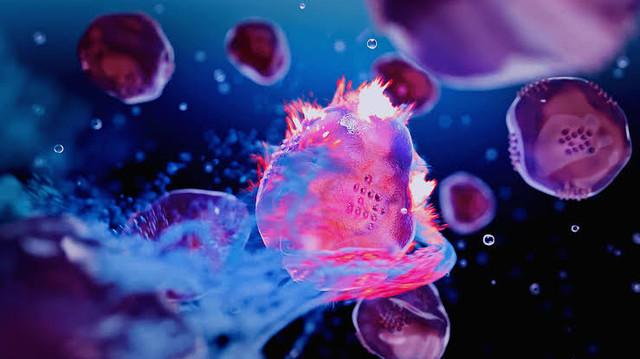
Medical science is filled with complex ideas that can be difficult to explain through words, diagrams, or traditional presentations. Molecular interactions, disease pathways, medical devices, and surgical procedures often require a deeper level of explanation.3D medical animation provides a visual way to present these subjects, helping audiences see how biological and clinical processes work.
Life Render specializes in creating scientifically accurate 3D medical animations for pharmaceutical, biotechnology, medical device, healthcare, and research teams. Its approach combines scientific understanding, cinematic 3D production, and structured storytelling to turn complicated medical information into clear visual communication.
What Is 3D Medical Animation?
3D medical animation uses three-dimensional models, movement, lighting, camera work, and visual effects to explain medical and scientific concepts. Unlike a static illustration, animation can show what happens over time.
For example, an animation can demonstrate how a therapy interacts with receptors, how a disease progresses through biological systems, how a medical device functions, or how a surgical procedure is performed step by step.
Life Render describes its work as translating complex medical, scientific, and technical concepts into clear visual stories. Its services cover mechanisms of action, mechanisms of disease, medical devices, surgical procedures, scientific visualization, and medical explainer content.
Why Visual Storytelling Matters in Healthcare
Medical information can contain multiple layers of detail. A written explanation may describe a process accurately, but the reader still has to imagine what is happening.
Visual storytelling can reduce that difficulty by showing relationships directly.
A 3D animation can move from a broad anatomical view into tissues, cells, or molecular structures. It can also show movement, interaction, sequence, and change. This makes it useful when the main communication goal involves explaining how something works.
Life Render emphasizes scientific accuracy, cinematic 3D quality, and communication-first storytelling. The company's process begins by understanding the scientific material, audience, and communication objective before developing the visual story.
Explaining Mechanisms of Action
One important application of 3D medical animation is Mechanism of Action, or MoA, visualization.
Pharmaceutical and biotechnology companies may need to explain how a drug, biologic, or therapy interacts with cells, receptors, pathways, or disease targets. These processes can be difficult to communicate using ordinary product images.
Life Render creates MoA animations that visualize therapeutic activity at molecular, cellular, and pathway levels. The company describes these animations as useful for product launches, investor presentations, healthcare professional education, clinical communication, and other pharmaceutical applications.
A carefully structured sequence can guide viewers from the initial therapeutic interaction through the biological process, creating a clearer story around the science.
Showing How Diseases Develop
Another important use is Mechanism of Disease, or MoD, animation.
Diseases can involve changes at several biological levels. Molecular changes may affect cells, cellular dysfunction can influence tissues, and those changes may eventually affect organs or produce clinical symptoms.
3D visualization can connect these stages in one continuous story.
Life Render's project guide describes MoD animation as a way to show how diseases develop, progress, disrupt normal biology, and affect biological systems. These visuals can support disease awareness, medical education, patient communication, research explanation, and healthcare campaigns.
Instead of presenting disconnected facts, animation can demonstrate how individual processes relate to one another.
Bringing Medical Devices to Life
Medical devices can also be challenging to explain with photographs or technical diagrams. Many devices contain internal components or perform movements that are not visible from the outside.
A 3D animation can show the internal structure of a device, demonstrate its movement, and visualize how it interacts with anatomy.
Life Render creates medical device animations that can explain device design, internal function, anatomy interaction, clinical use, and product value. These animations can support product launches, sales presentations, investor communication, training, and technical demonstrations.
This type of visual communication can help audiences understand not just what a device looks like, but how it functions.
Visualizing Surgical Procedures
Surgical procedures involve anatomy, instruments, movement, and multiple stages. Static diagrams may show anatomy, but they cannot always communicate the full sequence of a procedure.
Surgical animation provides a way to present the process step by step.
Life Render creates surgical animations that can demonstrate anatomy, procedural techniques, instrument movement, device placement, and other clinical steps. These visuals may be used for surgical education, training, patient communication, medical device demonstrations, and clinical presentations.
The ability to control camera position and visualize internal anatomy can make complicated procedures easier to follow.
A Structured Production Process
High-quality medical animation requires more than advanced 3D software. The scientific information must first be understood and organized into a meaningful visual narrative.
Life Render follows a structured process that includes reference review and goal setting, script and visual direction, storyboard and scene planning, 3D production, review, refinement, and delivery.
This process helps ensure that creative decisions remain connected to the scientific message.
Before production, clients can provide scientific papers, studies, product brochures, device descriptions, pathway information, target audience details, intended use, and visual references. A complete script is not necessarily required to begin the initial discussion.
Designing Content for Different Audiences
Medical animation can be created for very different audiences. A pharmaceutical company may need detailed scientific communication for healthcare professionals, while an investor presentation may require a broader explanation of the technology.
Patient education may need an even simpler visual approach.
Life Render states that its animations can support clinicians, investors, patients, sales teams, internal stakeholders, and other healthcare audiences. The level of scientific detail and storytelling can therefore be planned according to the purpose of the project.
This audience-focused approach helps prevent an animation from becoming either too technical or too simplified.
Quality, Accuracy, and Communication
Medical visuals need to look professional, but visual quality should work together with scientific accuracy.
Life Render describes its approach as combining scientific accuracy with cinematic 3D production and clear communication. Its About Us page also explains that projects are built around research and medical context, with workflows covering research, concept development, 3D development, review, and delivery.
For organizations communicating important medical information, this combination can provide a strong foundation for professional visual content.
Planning a 3D Medical Animation Project
Every project has different requirements. Animation length, scientific complexity, visual realism, number of scenes, review cycles, and delivery requirements can all affect the scope.
Life Render currently provides quote-based pricing, with published starting ranges for scientific and educational animation, medical device animation, surgical animation, and advanced MoA or MoD projects. The company notes that final pricing is confirmed after reviewing project materials and requirements.
Timelines also vary. Life Render lists shorter scientific visuals at around three to five weeks, standard 60–90 second medical animations at around six to ten weeks, and advanced MoA, MoD, device, or surgical projects at ten to fourteen or more weeks, depending on scope.
Conclusion
3D medical animation offers a powerful way to communicate complex healthcare and scientific information through movement, structure, and visual storytelling. From molecular mechanisms and disease pathways to medical devices and surgical procedures, animation can show processes that are difficult to communicate through static content alone. Life Render combines scientific research, visual strategy, storyboard development, cinematic 3D production, and structured review to create medical animations for pharmaceutical, biotechnology, healthcare, medical device, and research teams.
27.123.253.225
Harry Wilson
ผู้เยี่ยมชม
tecax32421@art2mart.com