
dajimoD
ผู้เยี่ยมชม
superdia11001@gmail.com
What Is Full-Grain Leather? A Complete Guide for UK Buyers (10 อ่าน)
23 ต.ค. 2569 00:07
What Is Full-Grain Leather? A Complete Guide for UK Buyers
Full-grain leather is widely regarded as one of the most desirable types of leather because it retains the natural grain surface of the hide. Unlike corrected-grain leather, its outer surface is not sanded away to remove natural imperfections. This allows the material to preserve its original grain pattern, natural markings and distinctive character.
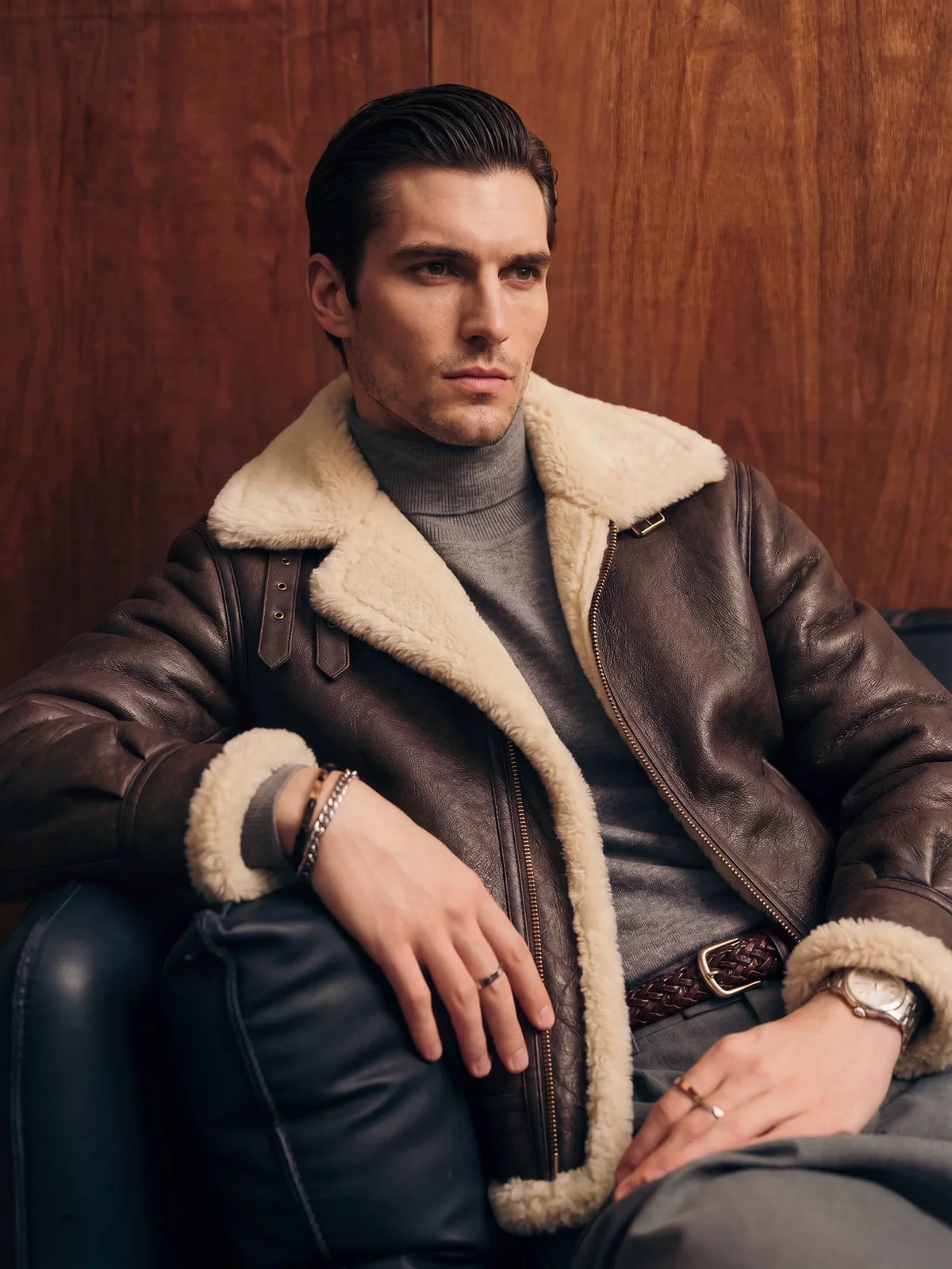
For UK buyers, understanding full-grain leather can make it easier to compare leather jackets, bags, footwear and other leather products. However, the term alone does not guarantee that a product is superior in every respect. Leather quality also depends on the hide, tanning process, finishing, thickness, construction and intended use.
This guide explains what full-grain leather is, how it is manufactured, how it compares with other leather types, and what buyers should consider before purchasing a leather jacket check here.
What Is Full-Grain Leather?
Full-grain leather is leather that retains the natural grain layer of the hide without sanding or buffing away the grain surface to remove imperfections.
The outer grain layer contains a dense fibre structure that contributes to the material's strength and durability. Because the natural surface remains visible, full-grain leather may display marks, wrinkles, scars and variations in texture.
These characteristics are not necessarily defects. They can be natural features of the hide and may contribute to the appearance of the finished product.
Full-grain leather is commonly used in premium leather jackets, footwear, handbags, belts and other products designed for regular use.
How Is Full-Grain Leather Made?
Full-grain leather begins with a suitable animal hide or skin. The material then passes through several processing stages before it becomes leather suitable for manufacturing.
A simplified production process is:
Raw hide → curing → soaking → liming → fleshing → tanning → splitting or thickness adjustment where required → dyeing → drying → finishing → inspection
The precise sequence depends on the tannery, the type of hide and the intended application.
1. Raw Hide Selection
The initial quality of the hide influences the final leather. Factors such as grain structure, thickness, natural markings and overall condition can affect its suitability for different products.
Full-grain leather does not mean that the hide has no imperfections. Instead, it means that the natural grain surface has been retained.
2. Cleaning and Preparation
Soaking and other preparatory operations help clean the hide and prepare it for tanning. Additional processes remove unwanted tissue and prepare the material for subsequent treatments.
3. Tanning
Tanning stabilises the hide so that it becomes durable leather rather than untreated animal skin.
Common tanning methods include chrome tanning and vegetable tanning. Either method can be used to produce full-grain leather, depending on the material and manufacturing process.
4. Dyeing and Finishing
Dyeing adds colour, while finishing can influence the surface appearance, feel, protection and consistency of the leather.
Some full-grain leathers have relatively natural finishes, while others receive more substantial surface treatments. Therefore, full-grain leather does not always have an untreated or completely natural surface.
5. Quality Inspection
The finished leather may be assessed for thickness, colour consistency, surface characteristics, flexibility and suitability for its intended application.
Manufacturers then select appropriate leather for particular products, including jackets, bags and footwear.
What Makes Full-Grain Leather Different?
The defining feature of full-grain leather is the retention of its natural grain surface.
This distinguishes it from several other leather types that may undergo additional surface processing.
Feature Full-Grain Leather Corrected-Grain Leather
Natural grain surface Retained May be sanded or buffed
Surface appearance Natural variations remain visible Often more uniform
Natural markings Commonly visible May be reduced
Finishing Can range from natural to coated Often receives corrective finishing
Ageing Depends on finish and use Depends on finish and coating
Typical applications Premium jackets, bags and footwear Jackets, furniture, footwear and accessories
Neither category automatically guarantees better overall performance. The quality of the hide, processing and finished construction remains important.
Full-Grain Leather vs Top-Grain Leather
Full-grain and top-grain leather are often discussed together, but the terms describe different approaches to processing the hide's outer layer.
Full-grain leather retains the natural grain surface without sanding or buffing it away to correct imperfections.
Top-grain leather is a broader category that can include leather whose surface has been sanded or otherwise corrected. The exact terminology used by suppliers may vary, so buyers should look beyond the product label.
Feature Full-Grain Leather Top-Grain Leather
Grain surface Natural grain retained May be corrected
Appearance Natural texture and markings Can be more uniform
Surface consistency Natural variations Often more consistent
Patina Possible, depending on finish Possible, depending on finish
Maintenance Depends on finish and leather type Depends on finish and leather type
Best suited for Buyers who appreciate natural character Buyers who prefer a more consistent appearance
When comparing products, ask the retailer how the leather has been processed rather than relying exclusively on the name.
Full-Grain Leather vs Genuine Leather
The expression “genuine leather” can be confusing because it is often used as a general description rather than a precise quality grade.
Full-grain leather identifies leather that retains its natural grain surface. Genuine leather, by contrast, does not necessarily tell the buyer whether the material is full-grain, corrected-grain or another form of real leather.
For this reason, the two terms should not be treated as direct equivalents.
A product described as genuine leather may be perfectly suitable for its intended use, but the description alone does not establish its grade, durability or overall quality.
UK buyers should look for specific information about the leather type, thickness, finish and construction.
Is Full-Grain Leather Better Than Split Leather?
Full-grain leather and split leather come from different layers or processing outcomes of a hide.
Full-grain leather retains the outer grain layer. Split leather is obtained when a hide is separated into layers, producing material from beneath the grain surface.
Split leather can be finished in different ways, including processes that create a suede-like surface or a coated appearance.
Feature Full-Grain Leather Split Leather
Material layer Outer grain layer Lower layer of the hide
Natural grain Retained Not present in the same form
Typical texture Natural grain pattern May be fibrous, napped or coated
Common applications Premium jackets, footwear and bags Suede products, footwear and other leather goods
Performance Depends on hide and construction Depends on processing and intended use
Split leather is not automatically unsuitable or poor quality. It can be a practical choice for products designed around its specific characteristics.
What Are the Advantages of Full-Grain Leather?
Full-grain leather offers several potential benefits, although the actual results depend on how the leather is processed and used.
1. Natural Appearance
Because the grain surface is retained, the leather can display distinctive markings and texture. This appeals to buyers who prefer materials with an individual appearance rather than a highly uniform finish.
2. Potential for Long-Term Durability
The dense fibre structure of the grain layer can contribute to strength and wear resistance. However, durability also depends on hide quality, thickness, tanning, stitching and how the product is used.
3. Distinctive Ageing
Some full-grain leathers develop a patina through exposure to light, handling, friction and the passage of time.
Patina is influenced by the leather's finish. A heavily coated full-grain leather may age differently from leather with a more natural surface treatment.
4. Repair and Maintenance Potential
Well-made leather products can often be cleaned, conditioned or repaired when appropriate. Repairability depends on the leather finish, garment construction, damage and availability of suitable materials.
5. Versatility
Full-grain leather can be used in different product categories, from structured footwear and bags to selected jacket designs.
However, its weight, stiffness and surface finish must suit the intended application.
Are There Any Disadvantages of Full-Grain Leather?
Full-grain leather is not necessarily the best option for every buyer.
Higher Purchase Cost
High-quality full-grain leather may cost more because of hide selection, processing requirements and the characteristics valued by manufacturers and customers.
Nevertheless, price alone does not prove that a product is made from better leather.
Natural Surface Variations
Scars, wrinkles, pores and colour differences may remain visible. Buyers who prefer a perfectly uniform finish may find these features less appealing.
Different Levels of Stiffness
Some full-grain leather is firm and structured, while other varieties are soft and flexible. The result depends on the hide, tanning, thickness and finishing.
Care Requirements
Leather may need appropriate cleaning and conditioning to maintain its appearance. The correct method depends on the finish and the manufacturer's instructions.
Not Automatically Waterproof
Full-grain leather should not automatically be considered waterproof. Water resistance depends on the leather treatment, finish, construction and any protective coating.
For UK weather, buyers should check the manufacturer's guidance on rain exposure, drying and protective products.
Which Animals Can Full-Grain Leather Come From?
Full-grain leather is a description of how the grain surface is retained, not the species of animal.
Different hides can produce
122.129.65.59
dajimoD
ผู้เยี่ยมชม
superdia11001@gmail.com